
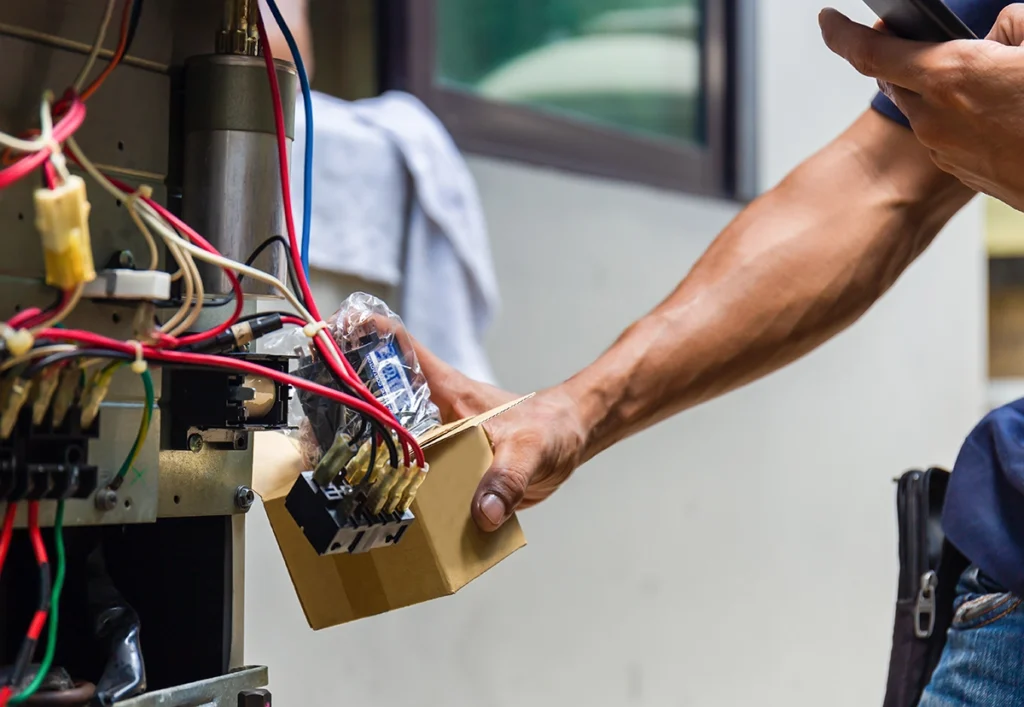
Your HVAC capacitor probably didn’t fail on its own — something upstream pushed it past its limit. Maybe a voltage spike during summer storm season, maybe restricted airflow from a clogged filter, maybe a compressor drawing too much current because the refrigerant charge is off. Capacitors store and release the jolt of electricity your outdoor fan motor and compressor need to start, so when something forces the system to work harder or exposes it to unstable power, the capacitor takes the hit first. If you just replace the capacitor without fixing what killed it, the new one will fail again — sometimes in weeks. We’ll walk you through what wears capacitors down, the warning signs before they quit, and why a proper diagnosis saves you from chasing the same breakdown twice.
What an HVAC Capacitor Does in Your System
When you adjust your thermostat and expect cool air or warm heat, a small cylindrical component inside your outdoor unit is making that comfort possible. The capacitor stores electrical energy and releases it in controlled bursts to power the motors that run your compressor and fan. AC capacitors provide the high-voltage jolt needed to start AC motors and release steady power to keep them running efficiently. Without that initial surge, the motor can’t overcome its own resistance and begin spinning. Your system simply won’t start, even if every other component is in perfect condition.
Most residential systems use either a start capacitor or a dual capacitor. A start capacitor delivers the initial kick and then disconnects. A dual capacitor, on the other hand, handles both the startup surge and the continuous run load for two motors. When a capacitor begins to weaken, you may hear the outdoor unit humming or clicking without starting. Alternatively, the system may run but shut off unexpectedly. Because the capacitor handles hundreds of start cycles each season and sits in a hot metal cabinet, it’s one of the most common wear components in your HVAC system.
If you’re noticing repeated start failures, longer run times, or rising energy bills, the capacitor may be losing its ability to hold and release charge. When we respond to diagnose the issue, we check not only the capacitor itself but also what’s causing it to fail prematurely.
Why HVAC Capacitors Fail
Capacitors rarely fail on their own. When we respond to a failing capacitor at your Thibodaux home, the real question isn’t just what’s broken—it’s what caused it to break. Most capacitor failures are symptoms of a larger problem in the system. Replacing the part without fixing the root cause means you’ll be back in the same situation within weeks or months.
We find several common upstream causes. Electrical supply problems, restricted airflow, overheating, and refrigerant imbalances top the list. Voltage surges from lightning strikes or grid fluctuations stress the capacitor’s dielectric material (the insulating layer inside), causing it to degrade faster than normal. Blocked airflow from a clogged filter or dirty outdoor coils forces the compressor or fan motor to work harder and draw more current. This overheats the capacitor and shortens its lifespan.
Refrigerant issues create abnormal pressure in the system, whether an undercharge from a leak or an overcharge from an improper service. In response, the compressor cycles erratically or runs continuously. Both behaviors overheat the start or run capacitor. Gulf Coast humidity accelerates corrosion on terminals and connections, creating resistance that generates heat and weakens the capacitor over time.
When we diagnose a failed capacitor, we check the entire system. First, we measure the incoming voltage to spot electrical instability. Then we inspect the condenser coils and filter for blockages. Next, we test refrigerant pressures with gauges to confirm the charge is correct. Finally, we examine the compressor and fan motors for bearing wear or draw problems. If the capacitor failed because the compressor is seizing or the system is low on refrigerant, simply installing a new capacitor won’t fix anything. The new part will fail just as quickly, or a more expensive component will give out next. A thorough diagnosis finds what broke the capacitor in the first place, so the repair actually lasts.
Signs Your Capacitor Is Failing
When a capacitor begins to fail, your HVAC system will usually warn you before it stops completely. The most common symptom we see is a humming noise coming from the outdoor unit without the fan or compressor actually starting. The motor tries to run but doesn’t have the electrical push it needs to turn over. You may also notice hard starts, where the system hesitates for several seconds before finally kicking on. Frequent random shutdowns during a cooling cycle can occur even though the thermostat is still calling for air.
Another clear warning sign is warm air blowing from your vents when the system is set to cool. This happens because a weak start capacitor can’t get the compressor running at full strength. Alternatively, a failing run capacitor causes the compressor to cycle off too soon. If you hear clicking sounds near the outdoor unit or see the breaker tripping repeatedly, those are urgent signals. The capacitor—or the system it’s trying to support—needs professional attention.
When you notice any of these symptoms, the safest step is to turn the system off and contact us at Good Call. We can diagnose whether the capacitor itself has failed or whether an upstream issue is causing it to struggle. That way, you get a repair that actually lasts.
When to Call for HVAC Capacitor Issues
If your system won’t start, starts then stops within seconds, hums loudly without running, or cycles on and off repeatedly, you need a technician to inspect your capacitor and connected components the same day. What might seem like a simple electrical hiccup can quickly cascade into compressor or motor damage. That turns a straightforward part diagnosis into a much larger repair. Waiting even a few days gives overheating and electrical stress time to wear down the very components the capacitor was meant to protect.
When you contact us at Good Call, we’ll talk through what you’re experiencing and schedule a visit to diagnose the root cause. We’ll test voltage across the terminals and inspect the compressor and fan motors for wear. Then we’ll check your electrical supply for surges or imbalances and verify that airflow and refrigerant pressures are where they should be. You’ll receive a clear explanation of what failed, why it failed, and what’s needed to restore safe, reliable operation. No pressure, just honest answers tailored to your home in Thibodaux. Reach out today and we’ll help you make the right call for your comfort and peace of mind.
Frequently Asked Questions
How do I know if my HVAC capacitor is bad?
Your outdoor unit will hum or click without starting, or the system will start then shut off within seconds. You may also hear hard starts with long delays. Warm air from your vents is another clue, as is a breaker tripping repeatedly. Turn the system off and call us to diagnose the capacitor and what caused it to fail.
Can I replace an HVAC capacitor myself?
We don’t recommend it. Capacitors store lethal voltage even after power is shut off, and mishandling one can cause serious injury. More importantly, a failed capacitor is usually a symptom. Voltage spikes, restricted airflow, refrigerant issues, or a struggling motor are the real problems. We diagnose the root cause so the repair lasts, not just the part replacement.
What causes an HVAC capacitor to keep failing?
Repeated failures usually mean an upstream problem is still present. Voltage surges, restricted airflow from clogged filters or dirty coils, refrigerant imbalances, or a compressor drawing too much current are common culprits. If you replace the capacitor without fixing what killed it, the new one will fail again in weeks. We’ll test voltage, airflow, and motor health to find the real cause.
How long does an HVAC capacitor last?
A capacitor typically lasts ten to fifteen years under normal conditions. However, Gulf Coast heat, humidity, and frequent cycling shorten that lifespan significantly. Electrical surges during storm season, dirty coils, or refrigerant problems accelerate wear even faster. We inspect the system to prevent premature failure and ensure reliable long-term performance.