
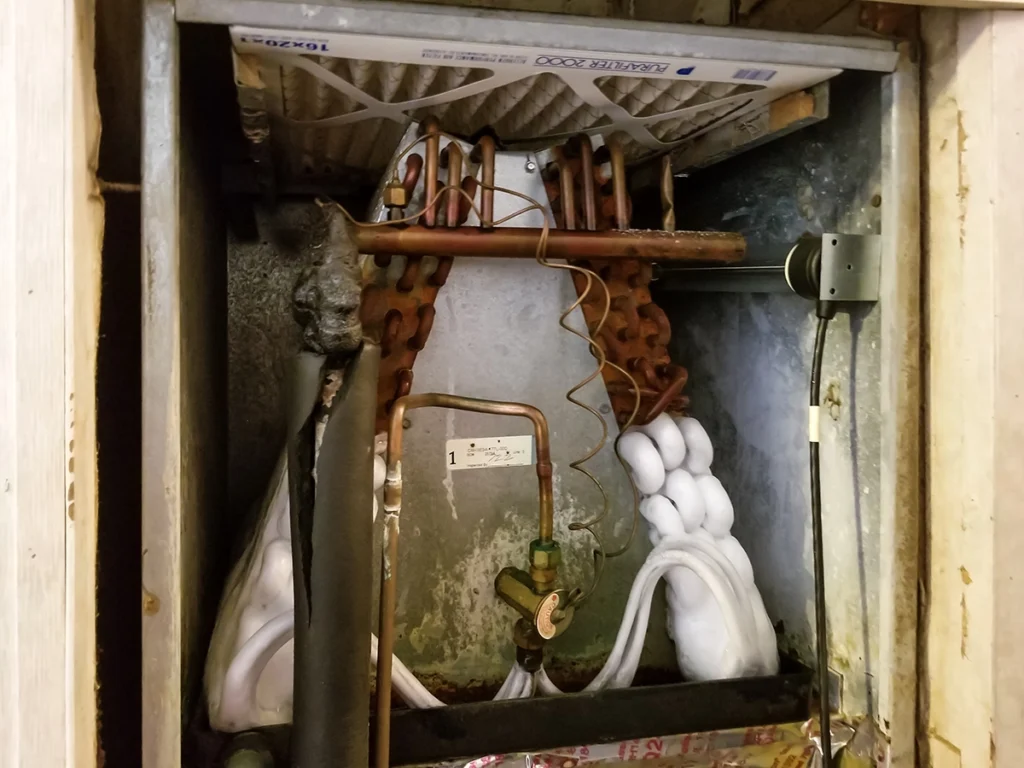
When your air handler capacitor bulging and preventing fan from running in Lockport, LA situation occurs, the part is failing. Something upstream is slowly cooking it from the inside. Common causes include poor airflow, voltage spikes, or chronic overheating. A bulging capacitor is a symptom, not the root problem. You’re likely seeing this after months of Gulf Coast humidity and long run cycles. Those conditions stress both the motor and the capacitor it feeds. If only the capacitor is replaced without finding out why it swelled, the new one will fail just as fast. The underlying cause is still there. We find the real reason, whether it’s a clogged coil, dirty blower wheel, weak compressor, or electrical supply issue. That way the repair actually lasts.
Why Is Your Air Handler Capacitor Bulging in Lockport?
A bulging air handler capacitor means the dielectric material inside has overheated and expanded under electrical stress. When that happens, the component can no longer store and release the energy needed to help start your blower motor and support smooth operation. You’ll notice your system running but no air moving through the vents. The fan may struggle to start and then shut down. The bulge itself is a symptom, not the root cause. Something upstream pushed that capacitor beyond its design limits. According to California DIR, the residual voltage of a capacitor shall be reduced to 50 volts or less within one minute after the capacitor is disconnected from the source of supply.
Heat is the most common culprit. When your air handler sits in a hot attic or a poorly ventilated closet in Lockport’s humid climate, the capacitor ages faster than its typical lifespan. Electrical surges from storms or unstable voltage can also stress the dielectric film until it swells. Dirty filters restrict airflow, forcing the blower motor to work harder and draw more current. This overheats the capacitor over time. A failing blower motor with worn bearings pulls excess amperage. That puts continuous strain on the start capacitor. Refrigerant imbalances can cause short-cycling, turning the motor on and off repeatedly and wearing the capacitor prematurely.
When we respond to a bulging capacitor call, we don’t simply swap the part. Instead, we measure voltage at the unit. We check the blower motor windings and amperage draw. We inspect airflow and filter condition. We test the contactor and electrical connections. Replacing the capacitor without diagnosing why it failed means the new one will bulge and fail just as quickly. The underlying problem may damage your blower motor or control board next.
What Causes an Air Handler Capacitor to Bulge?
Electrical Surges and Voltage Problems
Power fluctuations, whether from lightning strikes, grid instability, or a failing transformer on your street, send voltage spikes through your air handler. Capacitors are designed to handle a narrow voltage range. Repeated surges overheat the internal dielectric fluid until it expands and pushes the casing outward. Even if your lights flicker only occasionally, those brief spikes wear down the capacitor’s internal structure over time. A qualified technician can assess the electrical supply and recommend surge protection at the unit to protect replacement capacitors from the same fate.
Overheating from Airflow Restrictions
When your air filter is clogged, return vents are blocked, or ductwork is heavily restricted, the blower motor has to work harder to move air. That extra effort generates heat, and the capacitor sits close enough to the motor to absorb it. Over time, prolonged high temperatures break down the capacitor’s internal chemistry, causing the casing to swell. Similarly, if the evaporator coil is dirty or the condensate drain is backing up, heat builds inside the cabinet and accelerates capacitor wear.
Refrigerant and Pressure Imbalances
Low refrigerant levels force the compressor and blower to run longer cycles to reach your thermostat setting. The extended runtime raises operating temperatures throughout the system, including at the capacitor. High refrigerant pressure from an overcharged system or a restricted metering device creates similar heat stress. When we diagnose air handler capacitor bulging and preventing fan from running in Lockport, LA issues, we check refrigerant charge, airflow, and electrical readings to identify what pushed the part beyond its limits, so the repair lasts.
Why Replacing Just the Capacitor Usually Fails
When only a new capacitor is installed without finding out what caused the bulge, the symptom is being treated instead of solving the actual problem. Many homeowners watch a fresh part swell and fail again within weeks or even days when the root cause goes unaddressed. This is especially common with air handler capacitor bulging and preventing fan from running in Lockport, LA scenarios where the humid climate and electrical conditions create ongoing stress on the system.
The damage rarely stops with the capacitor. When the real cause, whether it’s a voltage surge, a locked motor bearing, restricted airflow, or refrigerant imbalance, goes undiagnosed, it continues damaging other components. Your air handler’s fan motor runs hotter and draws more current than normal. Contactors arc and pit. Windings inside the motor begin to break down. What could have been a straightforward repair now expands into motor replacement, a fried control board, or compressor failure. We see this progression often when only a quick part swap is attempted: the short-term fix becomes a much costlier repair a few weeks later.
What a Professional Diagnosis Uncovers
When we respond to a bulging air handler capacitor in Lockport, we start by measuring incoming voltage and checking for spikes or sags in your electrical supply. We inspect the fan motor for overheating, seized bearings, or winding resistance outside spec. We confirm your filter and return-air path are clear so the motor doesn’t labor against restriction. We test refrigerant pressures and superheat to rule out system imbalances that force the motor to work harder. During diagnosis, we often find carbon scoring on contactor points, discolored motor windings, or blown inline fuses that reveal how long the underlying issue has been active. Only after identifying and correcting the root cause do we install the replacement capacitor. That approach protects your new part, your equipment, and your investment.
When to Call for Air Handler Capacitor Problems in Lockport
If your air handler fan isn’t running and you notice the capacitor is swollen or bulging, call for professional service right away. A bulging capacitor won’t just fix itself. It’s a sign the component has already failed. Running the system in this state can damage the fan motor, the compressor, or other parts that depend on proper airflow.
You might also hear a humming sound from the air handler without any air movement. You may smell a burning odor near the unit. You could see your system short-cycling on and off repeatedly. Each of these symptoms points to the same root issue. The capacitor can no longer deliver the electrical boost your fan motor needs to start.
When we respond to air handler capacitor bulging and preventing fan from running in Lockport, LA calls, we don’t just swap the failed part. We inspect the electrical supply to your air handler. We check voltage and amperage at the motor. We examine the blower assembly for worn bearings or resistance. We confirm that airflow restrictions or refrigerant problems didn’t cause the overload in the first place. Diagnosing the underlying cause prevents the new capacitor from failing again a few weeks or months later.
Fall and early winter in Louisiana are ideal times to schedule this work. You’re not relying on cooling every day. You’ll have your system ready before the next heavy-use season. Reach out to Good Call to schedule a diagnostic visit. We’ll walk you through exactly what’s needed before any repair begins.
Frequently Asked Questions
Can a bulging air handler capacitor in Lockport be repaired, or does it need replacement?
A bulging capacitor must be replaced, the swollen casing means the internal dielectric material has failed and cannot be repaired. Before installing the replacement, we diagnose what caused the bulge, whether electrical surges, restricted airflow, or motor problems, so the new capacitor doesn’t fail the same way.
What happens if I keep running my air handler when the capacitor is bulging and preventing the fan from running in Lockport?
The blower motor will overheat and can burn out completely since it’s trying to start without the electrical boost the failed capacitor should provide. You risk damaging the motor windings, control board, and contactor. We recommend shutting the system off and calling us for diagnosis before further damage occurs. Issues with air handler capacitor bulging and preventing fan from running in Lockport, LA should never be ignored, as delayed repairs lead to expensive secondary failures.
How long does it take for a new air handler capacitor to fail again if the root cause isn’t fixed?
A replacement capacitor can fail in days or weeks when the underlying problem, voltage spikes, airflow restriction, or motor overload, is left in place. That’s why we check electrical supply, blower condition, refrigerant pressures, and airflow before installing the new part, protecting your investment from repeat failure.
Why does humidity in Lockport affect air handler capacitor life?
Gulf Coast humidity increases runtime and heat buildup in your air handler cabinet, especially when the unit is in a hot attic or poorly ventilated closet. Extended high temperatures accelerate breakdown of the capacitor’s internal components. Proper airflow, clean filters, and regular tune-ups help manage that stress and extend capacitor lifespan.