
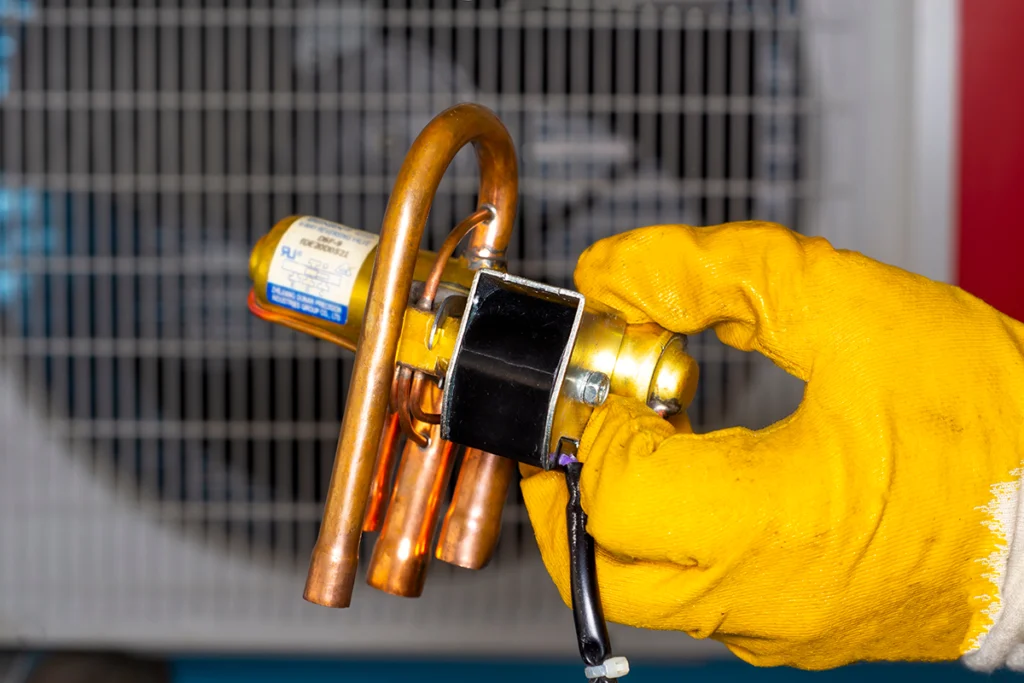
When your reversing valve stuck preventing heat mode in Morgan City, LA, it’s usually because something upstream broke first. The valve itself is rarely the root problem. Most stuck reversing valves are symptoms of electrical issues, refrigerant leaks, overheating compressors, or pressure imbalances. These conditions force the valve to work outside its design limits. If you just swap the valve without fixing what killed it, the new one will fail again. This often happens within weeks. We see this pattern constantly after homeowners replace parts based on a guess instead of a diagnosis. That’s why we always trace back to the original cause before we touch the valve.
Why Your Reversing Valve Stuck and Won’t Switch to Heat
A reversing valve stuck in cooling mode is rarely a part that simply wore out on its own. In nearly every case, the valve fails because something upstream damaged it. An electrical problem may prevent the solenoid from energizing. The solenoid is the magnetic switch that slides the valve. A refrigerant leak can drop system pressure too low to move the valve. Debris from a compressor failure can jam the slide. When you notice your heat pump blowing cold air in Morgan City during a cool snap, the valve itself is usually the victim, not the root cause.
The most common upstream culprits include a weak or failed solenoid coil. Low voltage reaching the valve due to corroded wiring or a failing thermostat also causes problems. Refrigerant undercharge can leave the valve unable to shift under pressure. Contamination in the refrigerant lines from a compressor breakdown also ranks high. Energy bills that spike by 30 percent or more often indicate a stuck reversing valve system working against itself. If your system runs constantly but never warms the house, the compressor may be fighting the valve’s position. It burns electricity and wears itself down.
When we respond to a reversing valve stuck preventing heat mode in Morgan City, LA, we start by testing the solenoid for power. Then we check refrigerant pressures and inspect the valve body for mechanical damage or contamination. Replacing the valve without finding the electrical fault, pressure imbalance, or debris source means the new part will fail just as fast. It can also trigger a larger breakdown. A proper diagnosis protects your investment and gets your heat back on for good.
What Actually Causes a Reversing Valve to Stick
The most common root causes are electrical supply problems, refrigerant pressure imbalances, solenoid coil failures, and mechanical wear from long-term stress.
Electrical issues top the list. The solenoid coil that moves the valve requires a steady 24-volt signal from your thermostat and control board. If voltage drops due to a loose wire, corroded terminal, or weak transformer, the solenoid won’t generate enough magnetic force to shift the valve’s slide. The valve stays locked in one mode.
Refrigerant pressure imbalances create another layer of trouble. When pressures on both sides of the valve aren’t balanced during the switch, the slide can’t move against the resistance. Low refrigerant charge, a restricted metering device, or a failing compressor all throw off that balance and leave the valve jammed mid-cycle or stuck in the last position.
The solenoid coil itself can fail internally, especially after years of heat exposure or moisture intrusion. When the coil’s windings short or open, the valve loses its switching signal entirely. Mechanical wear inside the valve, scoring on the slide, debris in the refrigerant circuit, or stiff O-rings will physically bind the valve even when the solenoid fires correctly.
Each of these causes is repairable, but only after a qualified technician isolates which system is failing. When we respond to a reversing valve stuck preventing heat mode in Morgan City, LA, we test electrical supply at the solenoid, measure refrigerant pressures, check for thermal overload, and inspect the valve body for physical damage. Only then do we decide whether to repair the upstream cause or replace the valve itself.
Why Replacing Only the Valve Sets You Up for Another Failure
When your heat pump won’t switch to heat mode and a reversing valve is stuck, it’s tempting to think that replacing that single part will solve everything. In reality, swapping the valve without addressing what killed it almost always leads to the same failure within weeks or months. Often, it creates bigger problems down the line. Reversing valves rarely fail on their own. They’re damaged by upstream issues like electrical surges, dirty coils that force the compressor to overheat, or restricted airflow that spikes discharge pressure. Sometimes a weak solenoid finally gives out after fighting low voltage for months.
When we respond to a reversing valve stuck preventing heat mode in Morgan City, LA, we trace the problem back to its root cause before recommending any parts. If you replace the valve but leave a clogged drain line that’s been starving the evaporator coil of airflow, the new valve will overheat just like the old one. If the real issue is a capacitor or a loose wire connection that’s sending voltage spikes through the system, the replacement valve’s solenoid will burn out even faster. Worse, ignoring the underlying cause can push the compressor to fail. That’s a much larger and more complex repair than the original valve ever was.
A thorough diagnostic catches what caused the valve to stick. It fixes that issue first. It confirms the system’s electrical and refrigerant pressures are stable before any part goes in. That’s the only path to a repair that actually lasts.
Next Steps When Your Heat Pump Won’t Switch to Heat Mode
If your heat pump won’t deliver warm air, a professional can diagnose the issue. Your technician will check the thermostat setting. They’ll confirm it’s on heat, not cool. They’ll verify the target temperature is above the current room temperature. They’ll inspect your air filter to see if it looks dirty or clogged. Restricted airflow can prevent the system from switching modes properly. The outdoor unit will be examined for leaves, debris, or ice buildup that might block airflow.
Your technician will also check whether the heat-pump circuit has tripped at the breaker panel.
If you notice ice forming on the coils, turn the system off. Hearing grinding or clicking from the outdoor unit is another warning sign. Cycling on and off without producing heat also signals trouble. Turn off the system to prevent further damage and give us a call. A reversing valve stuck preventing heat mode in Morgan City, LA needs professional diagnosis.
We serve Morgan City and the surrounding area. We’re ready to diagnose why your heat pump won’t switch modes. When you reach out, we’ll schedule a visit. We’ll inspect the reversing valve, check electrical signals, and test refrigerant pressures. We’ll identify the root cause. Contact Good Call today. We’re your neighbors, and we’re here to get your heat working again.
Frequently Asked Questions
What causes a reversing valve to stick and prevent heat mode in Morgan City, LA?
A reversing valve usually sticks because of an upstream electrical problem, refrigerant pressure imbalance, or failed solenoid coil, not simple wear. Low voltage from corroded wiring prevents the solenoid from shifting the valve. Meanwhile, refrigerant undercharge or a restricted metering device creates pressure that jams the slide. We diagnose the root cause before touching the valve itself.
Can I fix a stuck reversing valve myself?
No, diagnosing and repairing a stuck reversing valve requires refrigerant handling, electrical testing, and specialized tools that only a professional should use. You can safely check your thermostat setting and visually inspect the outdoor unit for debris. However, the actual valve repair must be done by a trained technician to prevent refrigerant loss or electrical damage.
Why does my heat pump blow cold air when the reversing valve is stuck?
The valve stays locked in cooling position, so refrigerant flows backward. The outdoor coil absorbs heat while the indoor coil releases cold air. We test the solenoid, check electrical signals, and measure refrigerant pressures to find what’s holding the valve in place and preventing heat mode.
Why does replacing the reversing valve alone often lead to repeat failures?
The new valve will fail again, often within weeks, because the electrical fault, pressure imbalance, or airflow restriction that damaged the first valve is still active. We’ve seen homeowners replace the same valve twice before calling us for the real diagnosis. A proper repair identifies and fixes the root cause first. This approach protects your investment and prevents repeat failures.