
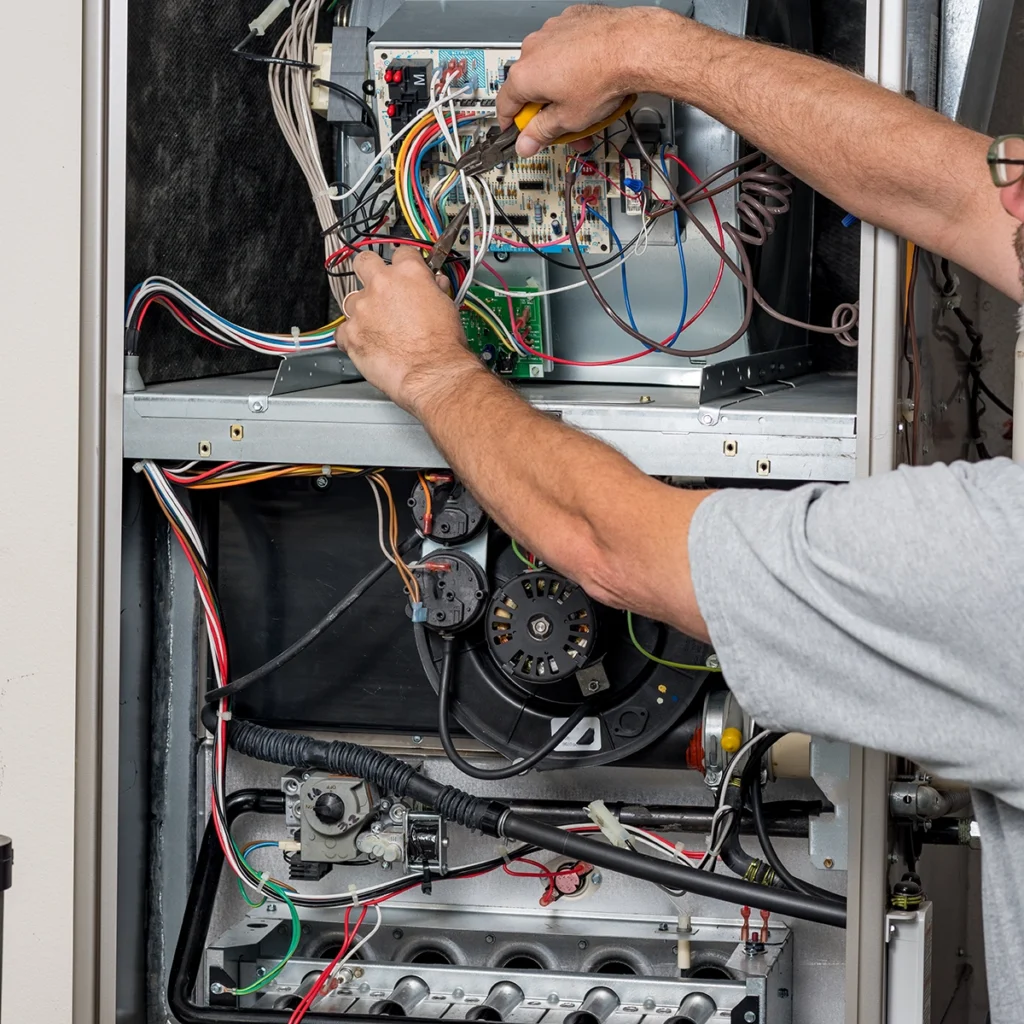
If your blower motor is running but no air flow reaches your vents in Morgan City, LA, something is blocked, disconnected, or sealed shut. The motor spins fine, but the air has nowhere to go. A crushed or detached duct, a frozen evaporator coil, or a clogged air filter will choke off airflow completely. Gulf Coast humidity and pollen can pack a filter solid even though the motor sounds normal. The problem isn’t the blower itself. Something in the system is strangling the path between the motor and your living space. Swapping the motor won’t restore airflow. Until a professional finds and fixes what’s blocking the air path, you’ll keep hearing the hum with zero comfort.
Why Your Blower Motor Runs But No Air Comes Out
When your blower motor hums or spins but no air reaches your vents, the problem is almost never the motor itself. Instead, something is blocking, choking, or isolating the motor from the rest of your system. A running motor tells you it’s getting power, but something upstream is preventing it from moving air through your ductwork. The most common culprits are a severely clogged air filter, a frozen evaporator coil, a blocked or collapsed duct, or a blower wheel that’s broken free from its shaft. Each of these conditions forces the motor to work harder while delivering zero comfort. Leaving them unaddressed leads to overheating, permanent motor damage, or even a cracked heat exchanger.
A clogged filter is the simplest cause. When the filter becomes packed with dust and debris, airflow drops to nearly nothing even though the motor keeps spinning. Clogged air filters dramatically reduce airflow and increase motor wear and energy consumption. A frozen coil happens when low refrigerant, a dirty coil, or that same clogged filter causes ice to build up and block the air path. A broken blower wheel, where the fan cage slips off the motor shaft, means the motor spins freely but the blades don’t turn at all.
We see these issues frequently in Morgan City, where high humidity accelerates coil fouling and filter saturation. Our team inspects the filter, the blower assembly, the coil for ice or blockage, and the ductwork for kinks or disconnections. That way, we can pinpoint the real cause and restore airflow safely.
What Blocks Airflow When the Motor Still Spins
When you hear your blower motor running but feel no air flow from the vents, the motor itself is rarely the root problem. In most cases, something downstream is blocking, restricting, or redirecting the air that motor is trying to push. The most common culprits are a frozen evaporator coil, a severely clogged air filter, a damaged blower wheel, or ductwork obstructions. Each creates enough resistance that the motor spins freely inside the cabinet but can’t deliver air to your home.
A frozen coil is particularly common in Morgan City’s humid climate. When airflow drops too low, often because of a neglected filter, the evaporator coil gets too cold. Ice then builds up across the fins. The motor keeps running, but the ice forms a solid barrier that stops air from passing through. A clogged filter creates the same restriction. Months of dust, pet hair, and debris pack the media so tightly that the blower can’t pull air through, even at full speed.
Another hidden cause is damage to the blower wheel itself. That’s the squirrel-cage fan inside the blower assembly. If the wheel’s fins break off, corrode, or become caked with oily dust, it spins without actually moving air. Ductwork problems can also isolate the blower from the rest of the system. Collapsed flex duct, closed dampers, or a disconnected return plenum all create the same symptom. When we respond to a no-airflow call, we inspect the coil for ice and pull the filter. We visually check the blower wheel for damage or buildup. We trace the duct connections to find any breaks or blockages before we address the motor. Replacing a motor without clearing the blockage guarantees the new one will fail just as quickly.
Why Replacing the Motor Won’t Fix the Problem
When a blower motor is running but no air is flowing through your vents, the immediate impulse is to replace the motor itself. Yet here’s what happens in most cases: the new motor runs perfectly for a few days or weeks, then fails in exactly the same way. The part wasn’t the problem. It was a victim of something upstream that hasn’t been addressed.
A blower motor doesn’t wear out on its own schedule. Something forced it to work harder than it was designed to handle. That might be a completely blocked evaporator coil choking off airflow. It could be a duct restriction starving the system of return air. Or it might be a refrigerant imbalance causing the indoor coil to freeze solid. When you replace the motor without finding that root cause, the new motor inherits the exact same stress. It overheats, the windings burn out, the bearings seize. You’re back where you started.
We’ve responded to countless calls in Morgan City where homeowners paid for two or even three replacement blower motors in a single year. No one had diagnosed why the first one failed. Each time, the underlying cause remained untouched. That might be a clogged drain line flooding the blower compartment. It could be an oversized motor cycling too rapidly. Or it might be a failed capacitor starving the motor of steady voltage. The damage doesn’t stop with the motor. Persistent low airflow stresses the compressor. It lets humidity build inside ducts. It can crack heat exchangers when the furnace side tries to fire without adequate ventilation.
When we respond to a no-airflow call, we don’t start by pricing a new motor. We measure static pressure across the system. We inspect the coil and ductwork for obstructions. We check electrical supply and capacitance. We trace back to the condition that made the motor fail. Treating the symptom is fast. Treating the cause keeps your system running.
Get Your Blower Motor Running But No Air Flow Fixed in Morgan City
You’ve identified the symptoms. Now you know a blower motor running without airflow isn’t a simple part swap. It signals that something upstream needs attention. The good news is you don’t have to figure out the rest on your own. We specialize in diagnosing exactly what’s causing the airflow restriction. That could be a clogged evaporator coil, a collapsed duct, a refrigerant issue starving the system, or an electrical fault. Sometimes the motor spins without engaging the blower wheel properly.
When you schedule a diagnostic visit, we examine the entire airflow path. That means checking from the filter housing and evaporator coil through the ductwork to your registers. We check static pressure readings and inspect the blower assembly for mechanical failures. We also test capacitors and control boards, then look for hidden clogs or blockages that homeowners rarely see. This approach finds the real cause, not just the visible symptom.
Ready to get cool air moving through your Morgan City home again? Reach out to Good Call today. Our specialists will walk you through what we find and explain your options in plain language. You can contact us by phone or fill out our quick online form. Either way, you’ll have expert guidance within hours.
Frequently Asked Questions
Why is my blower motor running but no air flow in Morgan City, LA?
Your blower motor is probably spinning fine, but a frozen evaporator coil, severely clogged air filter, or blocked ductwork is choking off the air path completely. The motor can’t push air through ice or a filter packed with dust. We inspect the coil, filter, blower wheel, and duct connections to find the blockage.
Can I just replace the blower motor to restore airflow?
Replacing the motor without diagnosing why it failed in the first place means the new one will fail just as quickly. The motor isn’t the root cause, it’s usually a victim of a frozen coil, blocked duct, or refrigerant problem forcing it to overwork. We trace the failure back to its source so the repair actually lasts.
What causes a blower motor running but no air flow in Morgan City, LA?
A frozen evaporator coil caked in ice, a clogged air filter blocking the return path, a damaged blower wheel that spins without moving air, or collapsed ductwork isolating the motor are the most common causes. Morgan City’s high humidity accelerates coil fouling and filter saturation, which both choke off airflow. We check each of these components during our diagnostic visit.
What do your technicians check when there’s no airflow but the motor runs?
We measure static pressure across the system, inspect the evaporator coil for ice buildup, pull and examine the air filter, check the blower wheel for damage or debris, and trace the ductwork for disconnections or blockages. We also test electrical supply, capacitors, and control boards to rule out mechanical or wiring failures that mimic airflow loss.