
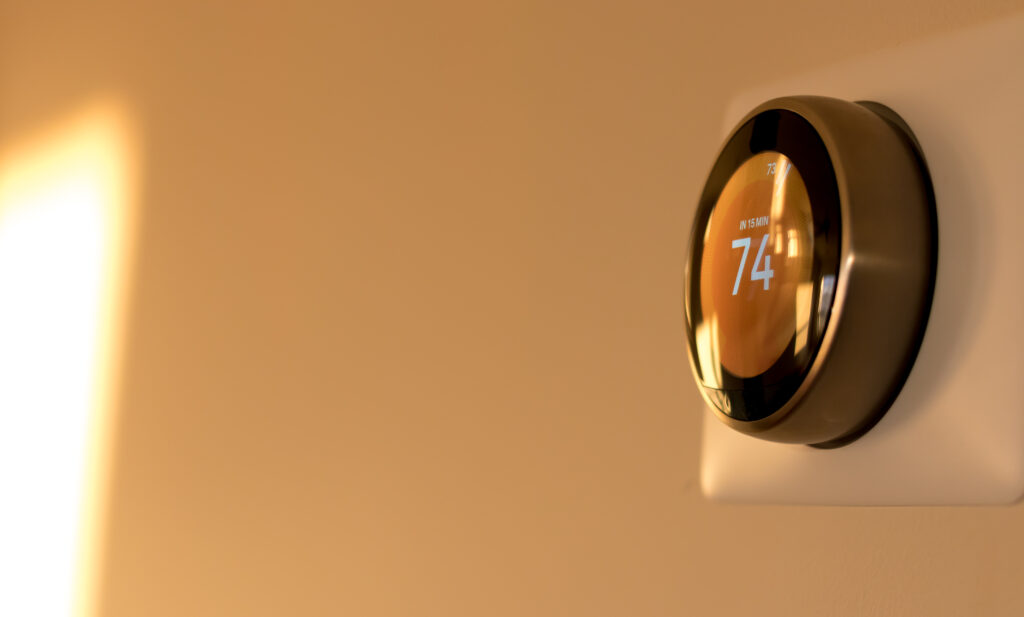
A thermostat not responding to temperature changes in Thibodaux LA usually means a dead battery, a tripped breaker, or a wiring issue. The problem sits between the thermostat and your HVAC system. If your unit keeps running even though the house hit your set temp, the thermostat lost communication with the equipment. If it won’t kick on no matter how you adjust the dial, same issue. Sometimes it’s a quick battery swap. Other times the problem sits deeper in the control board or at a loose wire. Summer storms that knock power around can cause this. That’s when a professional needs to trace the signal and get everything talking again.
Why Your Thermostat Isn’t Responding
When you adjust the thermostat and your home stays too warm or too cold, the disconnect between the dial and the actual temperature tells you something in the control chain has failed. You might notice the display lights up when you press buttons, but the system never kicks on. Or the unit runs constantly without ever reaching your set point. Both scenarios point to a breakdown in communication between your thermostat and your heating or cooling equipment. According to ENERGY STAR, eNERGY STAR certified smart thermostats must meet a static temperature accuracy requirement of plus or minus 2.0 degrees Fahrenheit.
A thermostat that’s unresponsive to temperature changes often stems from wiring problems, thermostat failure, HVAC control board issues, or tripped safety switches. Loose or corroded wires at the thermostat base can interrupt the low-voltage signals that tell your system when to start and stop. An aging thermostat may lose its calibration or fail internally. It might read room temperature incorrectly or send garbled commands.
Inside your air handler or furnace, a faulty control board can receive the signal but fail to activate the compressor or blower. Safety switches, like a float switch in the condensate pan or a limit switch on the furnace, can also cut power to protect your equipment when they detect water overflow or overheating.
When we diagnose a non-responsive thermostat in Thibodaux, we check voltage at the thermostat terminals and inspect wire connections for damage. We also test the control board for proper relay function and verify that all safety devices are reset and operating correctly. Pinpointing the exact cause requires a trained eye and a multimeter, because what looks like a simple thermostat problem may actually be a hidden issue deeper in the system.
Quick Checks Before You Call
Before you contact us, a few quick checks can help us diagnose your system faster. Sometimes they reveal a simple issue that needs attention. First, confirm your thermostat settings. Make sure it’s set to “cool” or “heat” depending on the season. The target temperature should be at least a few degrees away from the current room temperature. Thermostats should hold temperature accuracy within about two degrees of your setpoint. If your display shows the right mode and target but your system isn’t responding, the issue likely runs deeper.
A clogged air filter can also cause problems. It restricts airflow and can make your HVAC system cycle off too early. That makes it seem like the thermostat isn’t working. You may notice the filter looks gray or matted. Finally, walk to your breaker panel. Confirm that the circuit for your heating and cooling equipment hasn’t tripped. If you notice any of these issues, let us know when you call. We can bring the right equipment and parts for a fast repair.
If your thermostat still isn’t responding to temperature changes, it’s time to call Good Call for a professional diagnosis.
Common Causes Behind the Problem
Homeowners in Thibodaux often notice their thermostat not responding to temperature changes. A few common culprits typically explain why. Understanding what causes the disconnect helps you recognize which issues require professional attention. It also helps you spot problems that may be more urgent.
Wiring Issues and Power Loss
Loose, corroded, or disconnected wiring inside the thermostat is one of the most frequent reasons we see. Even a single wire pulled free from its terminal can stop the thermostat from sending signals. A tripped breaker, blown fuse, or dead batteries can also cut power entirely. Without steady power, your thermostat can’t read temperature or communicate with the HVAC system.
When we diagnose these cases, we inspect all wire connections. We test voltage at the thermostat base. We also verify that the control board is receiving the signal.
Failed Temperature Sensors and Calibration Drift
The small sensor inside your thermostat can fail or drift out of calibration over time. When that happens, the thermostat “thinks” the room is at the set point even though you’re uncomfortable. Dust buildup on the sensor, age, or exposure to direct sunlight and drafts can all skew readings.
We also check for placement problems. A thermostat mounted near a heat source, exterior door, or air vent often gets false readings. Those false readings prevent proper cycling.
Communication Breakdown Between Thermostat and System
Smart and programmable thermostats rely on low-voltage control signals. These signals tell your furnace, air handler, or heat pump when to run. A faulty control board, damaged transformer, or software glitch can sever that link. In these situations, the thermostat display may look normal. But the system never receives the call for heating or cooling. We test signal continuity and inspect both the thermostat and the equipment’s control board to pinpoint where communication fails.
Get Your Comfort Back Fast
If your thermostat won’t respond to temperature changes, you don’t have to wait until the problem becomes unbearable. When you reach out to us at Good Call, we’ll schedule a diagnostic visit at a time that works for your household. We arrive ready to inspect your thermostat, wiring, and system controls. Plus, we’ll walk you through what we find and what it means for your comfort.
During the visit, we test signal continuity and examine voltage at the control board. We also inspect sensor calibration and verify that your system’s components are communicating correctly. We check for hidden issues, too, loose connections behind the wall, dust buildup in relay switches, aging wiring, or settings that may have been changed accidentally. Once we identify the root cause, we explain your options clearly so you can make the best decision for your home and budget.
Book Ahead for Peace of Mind
With Louisiana’s cooling season just around the corner, now is the perfect time to schedule service before demand spikes and our calendar fills up. When you contact us to book a diagnostic visit, you’re locking in a spot before the rush. That means you’ll have reliable climate control exactly when you need it most. Reach out to Good Call today, and let’s restore the comfort and dependability your Thibodaux home deserves.
Frequently Asked Questions
Why is my thermostat not responding to temperature changes in Thibodaux LA?
Dead batteries, a tripped breaker, or loose wiring are the most common reasons your thermostat won’t respond. We check power supply and inspect wire connections at the thermostat base. We also test the control board for proper signal relay. Sometimes a faulty temperature sensor or failed relay prevents communication between the thermostat and your HVAC system.
How do I know if my thermostat or my HVAC system is the problem?
If your thermostat display lights up but the system never kicks on, the issue often sits in the wiring or control board rather than the thermostat itself. We test voltage at both ends, checking signal continuity from the thermostat to the equipment, so we can pinpoint whether the thermostat, the wire run, or the HVAC control board is causing the disconnect.
Can a dirty air filter cause my thermostat not to respond to temperature changes?
Yes, because a clogged filter restricts airflow and triggers safety switches that shut your system down before it reaches your set temperature. The thermostat continues to call for heating or cooling, but the equipment won’t run. When we inspect your system, we check the filter condition along with sensor calibration and wiring to identify all contributing factors.
What will a technician check when my thermostat won’t control temperature?
We inspect the thermostat wiring for loose or corroded connections and test voltage at the control board. We also verify sensor calibration and confirm that all safety switches are reset and functioning. We check for placement issues, like direct sunlight or drafts, that skew temperature readings, too. Once we trace the communication breakdown, we explain your repair options clearly so you can restore comfort fast.