
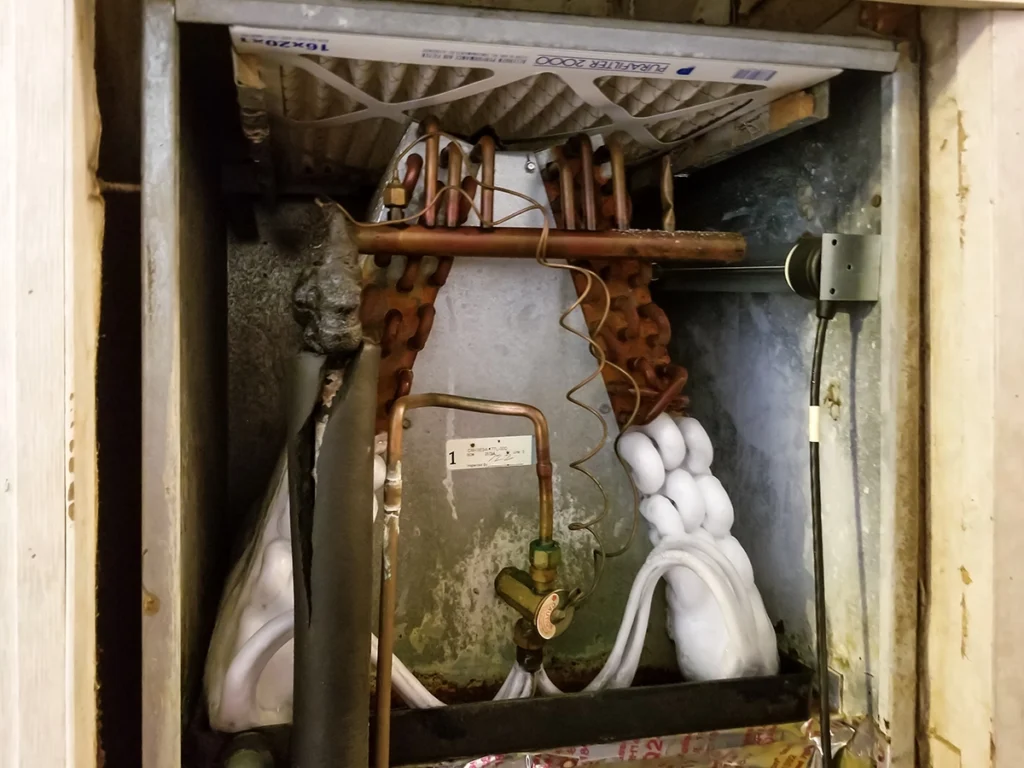
Why is your evaporator coil leaking water inside the house in Vacherie, LA? Most of the time, it’s not the coil itself. It’s a clogged condensate drain line that can’t carry moisture away. Water backs up and spills out around the unit. Between Gulf humidity and dust pulled through your filter, that drain line builds up algae and sludge fast. If you notice standing water near your indoor unit, turn the system off and call a technician right away. The real cause might be a frozen coil that’s now thawing. It could also be low refrigerant or even a cracked drain pan. Those need our technicians to diagnose and fix safely.
Why Is My Evaporator Coil Leaking Water Inside?
When water shows up inside your home near the indoor air handler, the evaporator coil is often involved. Yet the leak itself is usually a symptom of something upstream that blocked drainage or caused ice buildup. Your coil naturally produces condensation during the cooling cycle. That moisture is meant to drain harmlessly into a pan and out through a condensate line. When either of those paths fail, water pools on the floor or drips through ceilings instead.
The most common cause is a clogged condensate drain line, where algae, mold, or debris builds up and backs water into the overflow pan. A frozen evaporator coil is another frequent culprit. Poor airflow from dirty filters causes the coil to freeze, and when the ice melts it overwhelms the drain pan with more water than it can handle. Other triggers include a cracked or rusted drain pan, a disconnected drain line, low refrigerant that causes ice formation on the coil, or a failed condensate pump that no longer lifts water out to the drain.
When you notice water pooling near your indoor unit in Vacherie, turn the system off to stop further condensation and call a technician. We inspect the entire drainage path, check airflow and filter condition, test refrigerant levels, and identify whether the leak is a simple blockage or a sign of a deeper equipment problem. Catching the root cause early prevents water damage to your floors, walls, and ductwork.
What Actually Causes an Evaporator Coil to Leak in Vacherie Homes
When you notice water pooling near your indoor air handler, the evaporator coil itself is rarely the starting point. Most leaks trace back to upstream problems that create conditions the coil wasn’t built to handle. A clogged condensate drain is the most common culprit. When the drain line clogs with algae, dust, or debris, water backs up into the drain pan. Eventually it overflows onto your floor. Failed drain lines can expose building materials to moisture and cause serious water damage inside the home.
Frozen coils are another frequent cause. When airflow drops too low or refrigerant pressure falls out of range, ice forms on the coil surface. It melts faster than the drain system can handle once the unit cycles off. Corrosion eats through coil metal over time, especially in humid climates like Vacherie’s. A dirty air filter or blocked return vent starves the coil of airflow and forces your unit to run colder than design temperature. That triggers freeze-thaw cycles that crack seams and joints.
Refrigerant issues shift the pressure balance inside the coil. Low charge or a slow leak elsewhere in the system drops the coil temperature below freezing even in mild weather. An oversized or short-cycling system never runs long enough to pull humidity out of the air. Standing condensate finds any weak point in the coil or pan.
When we respond to a leak call, we trace the water back to its source. We check drain line flow and measure airflow across the coil. We test refrigerant pressures with gauges and inspect the coil surface for ice or corrosion. We also evaluate whether the system is sized correctly for your home. Replacing the coil without fixing the underlying cause means you’ll see the same problem again within months.
What to Look For Before You Call (No-Touch Warning Signs)
Before you reach out for service, there are a few simple warning signs you can observe. These will help us diagnose the problem faster when we arrive. First, check your thermostat setting. If the fan is set to “on” instead of “auto,” it runs continuously. This can cause condensation to drip from the coil without time to drain properly. That setting alone can create water buildup even when the equipment is otherwise healthy.
Next, look at your air filter without removing any panels or covers. If it appears darkened, matted, or visibly clogged, that’s a strong sign. Restricted airflow may be causing the coil to freeze and then leak during the melt cycle. Check whether any rooms feel warmer than usual. Also listen for unusual sounds like hissing or bubbling near the indoor unit. Both can indicate refrigerant or drainage issues. Finally, if you can safely see the area around your indoor unit, look for standing water, rust stains, or visible ice on accessible surfaces.
These observations take just a few minutes. They give our team valuable clues when we assess the system. Keep in mind, you should not attempt to access the drain line, remove panels, or touch any components. Our technicians have the tools and training to inspect and clear blockages safely.
Schedule Your Evaporator Coil Inspection in Vacherie
You don’t have to figure this out on your own. If water is pooling inside your home near the air handler, we can help. If you’ve noticed warm spots in rooms that used to stay comfortable, we can help. Our team at Good Call responds to homes throughout Vacherie with straightforward diagnostic service. We start by finding the real cause. We know that a leaking or failing evaporator coil is rarely the full story. We won’t rush to replace a part without understanding what led to the failure.
When you contact us, we’ll schedule a time that works for your household. During the visit, we inspect several key areas. We check refrigerant pressures and airflow across the coil. We examine drain line condition, electrical components, and the equipment’s service history. We explain what we find in plain terms. We walk you through the options that make sense for your system and your home. Our goal is to solve the problem once, not put a patch on a symptom that will fail again next season.
Reach out to Good Call today to book your inspection. You can call us or fill out the service form on our website. We’ll get back to you with a prompt appointment. We’re here to bring clarity, honest answers, and reliable repair to homeowners across Vacherie.
Frequently Asked Questions
Can I fix an evaporator coil leaking water inside the house in Vacherie, LA myself?
The diagnostic work and actual repair need a professional to safely check refrigerant levels, airflow balance, and hidden drain line clogs. We inspect the entire system to find the root cause, not just the symptom, so the leak doesn’t return weeks later. Attempting to clear drains or access refrigerant lines without proper tools and training can cause equipment damage or safety hazards.
How long does it take to stop an evaporator coil from leaking water?
Once we arrive and identify the cause, most evaporator coil leak repairs take two to four hours. The time depends on whether the fix is a drain line flush, refrigerant charge correction, or coil replacement. We complete the full diagnostic and repair in a single visit whenever possible, then test the system to confirm proper drainage.
What happens if I ignore water leaking from my evaporator coil in Vacherie?
Ignoring the leak allows water to damage flooring, drywall, and ductwork. Mold begins forming in damp areas within forty-eight hours. The underlying cause, frozen coil, low refrigerant, or clogged drain, also stresses the compressor and blower motor. This can lead to much larger equipment failures if left unchecked.
Will my evaporator coil keep leaking water inside the house after you repair it?
Not if we identify and fix the upstream cause during the visit. We don’t replace parts without diagnosing why the parts failed, because a new coil will leak again if low airflow, refrigerant imbalance, or a blocked drain remains in the system. Our diagnostic process solves the problem at its source.