
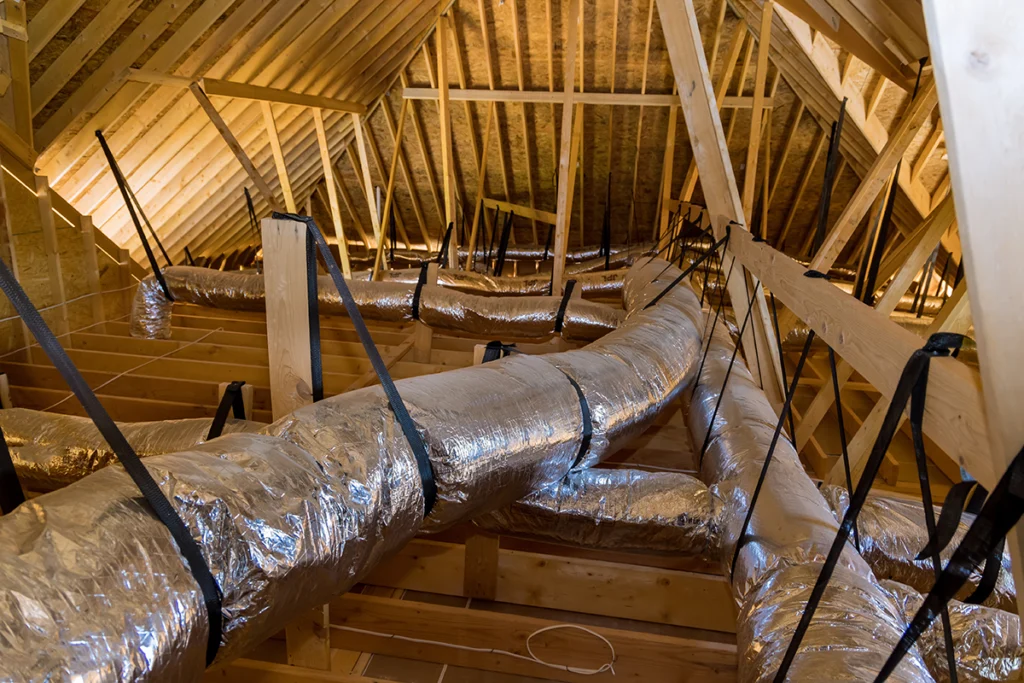
Your HVAC ductwork is the highway system that carries heated or cooled air from your unit into every room of your home. When it’s cracked, disconnected, or caked with dust, you’re essentially paying to cool your attic and heat your crawl space instead of your living room. That shows up as uneven temperatures, high power bills, and stuffy air — especially brutal during a Thibodaux August when your system’s already working overtime against Gulf humidity. Most ductwork lives hidden behind walls and ceilings, so problems sneak up on you. Suddenly one bedroom becomes an icebox while the other turns into a sauna. We inspect and repair duct systems every day. Once the leaks are sealed and airflow is balanced, homeowners notice the difference immediately.
What HVAC Ductwork Actually Does
Your HVAC system might be powerful and efficient, but without properly functioning ductwork, that conditioned air never reaches the rooms where you need it. Think of ductwork as the circulatory system of your home’s heating and cooling. Metal or flexible conduits carry heated or cooled air from your furnace or air handler through the walls, ceilings, and floors, then deliver it through supply registers in each room. Return ducts pull air back to the system to be reconditioned, creating a continuous loop that maintains your comfort.
When your ductwork is sealed, insulated, and correctly sized, you’ll notice even temperatures throughout your home. You’ll also see lower energy bills and a system that doesn’t run constantly trying to keep up. However, according to the Department of Energy, air distribution efficiency in many homes is only 60-75% due to insufficient duct insulation and system leaks. That means up to 40% of your heated or cooled air can escape into attics, crawl spaces, or wall cavities before it ever reaches your living space — spaces you’re not trying to condition.
We see this inefficiency show up in several ways. Hot or cold spots appear in certain rooms. Utility bills climb unexpectedly. An HVAC system cycles more often than it should. When we inspect ductwork, we look for disconnected joints, holes, poor insulation, and improper airflow balance (the ratio of supply to return air). Identifying these issues early helps restore comfort and efficiency before minor leaks turn into major energy waste.
Signs Your Ductwork Needs Attention
Your home’s ductwork moves conditioned air through every room, but when something goes wrong, the symptoms show up fast. If some rooms feel noticeably warmer or cooler than others — even with the thermostat set evenly — your ducts may have leaks, blockages, or poor design. You might also notice your energy bills climbing without a clear reason. Escaping air forces your system to run longer and work harder to maintain comfort.
Other warning signs include visible dust buildup around vents, a musty smell when the system runs, or whistling and rattling noises from the ducts themselves. These symptoms often point to disconnected joints, torn flexible duct, or excessive static pressure. Static pressure is the resistance air faces as it moves through the system. When we inspect ductwork, we check for physical damage and measure airflow at each register. We also look for gaps where conditioned air escapes into attics, crawl spaces, or wall cavities.
If you’re experiencing any of these issues in your Thibodaux home, professional heating and cooling solutions can help identify and resolve ductwork problems. Early attention prevents small leaks from becoming major efficiency drains.
Common HVAC Ductwork Problems
Even a perfectly tuned HVAC system can struggle if your ductwork isn’t up to the job. Over time, ducts develop leaks at the seams or joints. Conditioned air escapes into your attic, crawlspace, or wall cavities before it ever reaches your living spaces. You might notice some rooms never quite reach the temperature on your thermostat, or your energy bills climbing without an obvious reason. Duct leaks also create negative pressure that can pull in dust, insulation fibers, and humid outdoor air — especially problematic in Thibodaux’s climate where moisture control matters year-round.
Disconnected duct sections are less common but create dramatic comfort problems when they happen. A boot (the metal or flex connector between the duct and the register) can separate during construction settling or after attic work. This leaves a room with barely any airflow. Poor insulation on ducts running through unconditioned spaces is another frequent issue we see. Hot attic air in summer or cold air in winter works directly against the temperature you’re paying to deliver. This forces your system to run longer cycles and wear out sooner.
Undersized ductwork is often a hidden culprit, especially in homes where HVAC equipment was upgraded without evaluating whether the existing ducts could handle the new airflow. When ducts are too narrow for your system’s capacity, you’ll hear excessive air noise at the registers. Airflow feels weak even when the blower runs at full speed. This puts unnecessary strain on the blower motor. We inspect the entire duct layout during service calls, checking for visible gaps and measuring static pressure to identify restriction points. We also use thermal imaging when needed to spot temperature loss along the duct runs. If you’re experiencing uneven temperatures, high energy costs, or excessive dust despite regular filter changes, the EPA recommends evaluating your ductwork as part of maintaining good indoor air quality. Contact Good Call so we can assess your system and restore balanced, efficient airflow throughout your home.
Schedule Your Ductwork Inspection
If you’ve noticed uneven temperatures, dusty air, or rising utility bills in your Thibodaux home, your ductwork may need attention. Our team at Good Call has helped countless neighbors across the area restore balanced airflow and reclaim the comfort they deserve. We take the time to evaluate every inch of your system — from your main trunk lines to the smallest branch runs. Along the way, we check for leaks, disconnections, poor insulation, and areas where conditioned air escapes into unconditioned spaces like attics or crawlspaces.
During the inspection, we’ll also look for collapsed sections, crimped flex duct, and excessive dust buildup that restricts airflow. If we find problems, we’ll walk you through what we discovered. We explain how each issue affects your comfort and efficiency, then provide a clear explanation of the repair or sealing work needed. Our goal is to give you the information you need to make the right decision for your home — no pressure, no surprises.
Ready to find out what’s happening behind the walls and above the ceiling? Give us a call or fill out our quick contact form with a few details about what you’re experiencing. Even if you just have a question about what might be going on, we’re here to help. Good Call has been a trusted name in Thibodaux for years. We’re ready to bring that same dependable service to your home.
Frequently Asked Questions
How long does HVAC ductwork typically last?
HVAC ductwork typically lasts 15 to 25 years, though poorly installed systems or those in harsh environments like unconditioned attics can fail sooner. Metal ducts hold up longer than flexible duct, which can sag, tear, or disconnect at the joints. We recommend a professional inspection every few years to catch leaks and deterioration before they tank your efficiency and comfort.
Can I inspect my own ductwork for problems?
While you might spot obvious tears or disconnections in visible duct sections in your attic or crawlspace, most of the system is hidden behind walls and ceilings. Problems aren’t visible to the eye in those areas. A certified technician uses airflow meters, pressure gauges, and thermal imaging to find leaks and issues that can’t be detected without specialized equipment. If you’re noticing uneven temperatures or high bills, call us for a thorough inspection.
What causes HVAC ductwork to leak?
HVAC ductwork leaks when seams and joints separate over time due to temperature cycling, settling, or poor initial installation. Flexible duct can tear if it rubs against framing or gets stepped on. Tape and mastic also degrade with age, especially in hot, humid climates like ours. We’ll seal leaks with proper materials and restore efficient airflow.
How do I know if my ductwork is the right size for my system?
Loud air noise at registers, weak airflow, or rooms that never reach temperature usually mean your ductwork is undersized for your system. We measure static pressure and airflow at each register to confirm the match. Then we evaluate the entire layout and recommend adjustments if needed.