
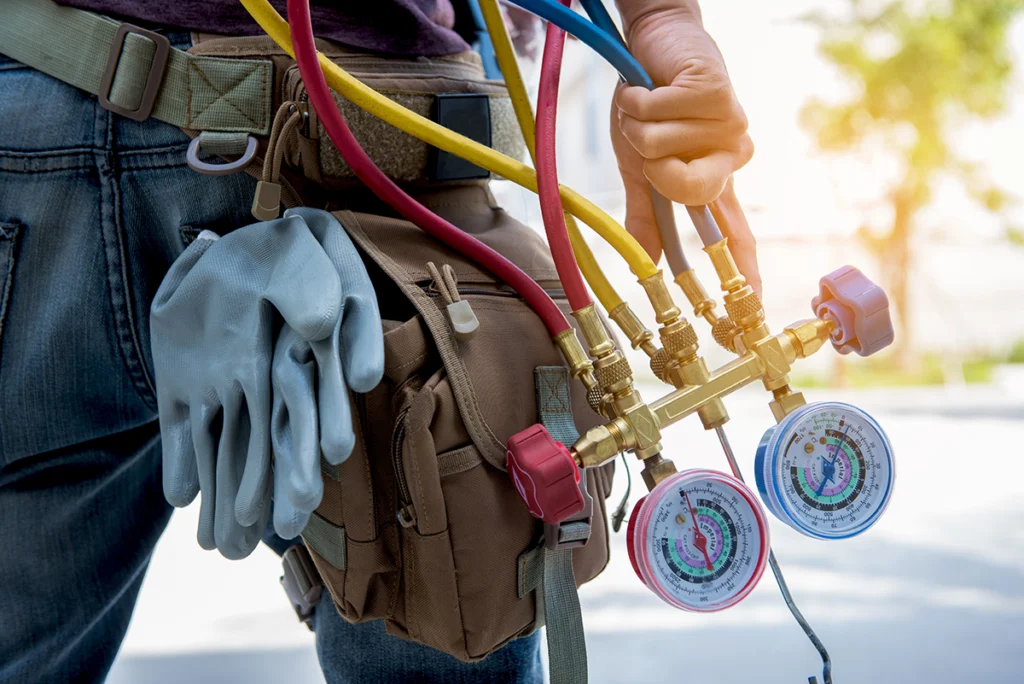
Our HVAC tools get heavier every year — because your system in Thibodaux requires more than a screwdriver and hope, especially when Gulf humidity puts extra strain on every component. A basic service call from our team means hauling in digital manifolds, refrigerant gauges, leak detectors, combustion analyzers, and specialty wrenches most homeowners have never seen. You’re probably curious what all that equipment actually does and whether it really matters for your comfort. The short answer is yes — the right tools let us diagnose problems fast, fix them right the first time, and keep your system running dependably through brutal August heat.
What HVAC tools do the pros actually use?
When you schedule an HVAC service call, you might notice we arrive with more than a standard household toolbox. That’s because heating and cooling systems require specialized diagnostic and repair equipment. These tools measure refrigerant pressures, test electrical circuits under load, and diagnose issues that aren’t visible to the naked eye. Most technicians carry digital multimeters for testing voltage and continuity. We also bring manifold gauges for reading refrigerant pressures on both the high and low sides of the system. Vacuum pumps help us evacuate moisture during system service, according to industry standards. Of course, you’ll also see screwdrivers, nut drivers, pliers, and adjustable wrenches for the mechanical work.
What separates professional HVAC tools from general hardware isn’t just precision—it’s safety and code compliance. Refrigerant handling equipment must meet EPA standards. Electrical testers need to be rated for the voltages involved. Combustion analyzers (devices that measure flue gases in furnaces) help ensure your system isn’t producing dangerous carbon monoxide levels. When we respond to a service call at your Thibodaux home, the tools we bring let us pinpoint whether your issue is electrical, mechanical, or refrigerant-related. That diagnostic speed means faster repairs, fewer return visits, and a system that’s fixed right the first time.
Why specialized HVAC tools matter for your system
When we arrive at your home in Thibodaux to diagnose a heating or cooling issue, the difference between guessing and knowing comes down to the precision tools we bring. A manifold gauge set measures refrigerant pressures to the exact PSI. A digital thermometer reads supply and return air within a tenth of a degree. A combustion analyzer detects unsafe carbon monoxide levels. These aren’t luxuries — they’re the only way to see what’s actually happening inside your system, rather than relying on symptoms alone. If your air conditioner is blowing warm air, for instance, the cause could be low refrigerant, a failing compressor, a clogged filter drier, or even a wiring fault. Without the right diagnostic equipment, a technician is working blind. That guesswork can lead to unnecessary part replacements, missed safety hazards, or a temporary fix that fails again in days.
Professional-grade HVAC tools also protect you during the repair itself. Refrigerant recovery machines ensure we handle refrigerant according to EPA regulations—a legal requirement and an environmental responsibility. Calibrated torque wrenches prevent over-tightening that can crack fittings and cause leaks. Electrical multimeters let us safely test voltage and continuity without risking a short circuit or shock. These tools aren’t just about accuracy; they’re about completing the work safely and in compliance with manufacturer specifications and local codes.
A well-equipped technician can often diagnose the root cause in minutes. Then we explain exactly what needs repair and give you a detailed estimate before any work begins. This approach saves you time, prevents collateral damage, and ensures the repair lasts.
At Good Call, we invest in professional equipment because your comfort and safety depend on it. When you’re facing an HVAC problem, contact us for an inspection. We’ll use the right tools to find the real issue and restore reliable performance to your system.
Diagnostic HVAC tools every tech carries
When our technicians arrive at your Thibodaux home to diagnose a heating or cooling issue, we rely on a suite of precision diagnostic tools that go far beyond a simple screwdriver set. Modern HVAC diagnostics start with digital manifold gauges. These electronic instruments measure refrigerant pressure and temperature with accuracy down to a tenth of a degree. The gauges reveal superheat and subcooling values—the temperature differences that show whether your system is overcharged, undercharged, or cycling properly. Those values pinpoint refrigerant issues invisible to the naked eye. Where older analog gauges required guesswork, today’s digital tools give us real-time data that speeds up diagnosis and ensures we’re targeting the actual problem, not just a symptom.
We also carry multimeters to test electrical components like contactors, transformers, and control boards. These instruments measure voltage, current draw, and resistance to identify failing parts before they leave you without air conditioning on a humid Louisiana afternoon. Airflow meters help us verify whether your system is moving the right volume of air across the evaporator coil. Restricted airflow from a dirty coil or undersized ductwork can mimic refrigerant problems, so measuring cubic feet per minute (CFM) tells us whether the issue is mechanical or airflow-related. For refrigerant leaks, we use electronic leak detectors sensitive enough to find pinhole breaches in copper line sets or coil welds that would take hours to locate by sight alone.
These tools don’t just save time—they protect your investment by ensuring we make the right repair the first time. If your system is short-cycling, blowing warm air, or running but not cooling effectively, the data these instruments provide guides us to a precise fix. That means no trial-and-error parts swapping. When you call Good Call, you’re getting a diagnostic approach built on accuracy, so you understand exactly what’s wrong and what it takes to restore comfort.
Schedule service with Good Call’s fully equipped team
When you need HVAC service in Thibodaux, you deserve technicians who show up ready to diagnose the problem correctly the first time and complete the repair without delay. Our team brings all the specialized diagnostic and repair equipment to your home. That includes manifold gauges that measure refrigerant pressures, infrared leak detectors, combustion analyzers, and calibrated electrical meters. We’re prepared for what your system needs, whether that’s clearing a clogged drain line, recalibrating a faulty control board, or replacing a worn compressor.
You don’t have to guess what’s wrong or wonder whether a second trip will be needed for parts or tools. We approach every service call with the right equipment and the training to use it effectively. So you get an accurate diagnosis and a clear picture of what the repair involves. That means fewer surprises and faster resolution when your heating or cooling isn’t working the way it should.
The key takeaway: professional HVAC work depends on precision tools and experienced technicians who know how to interpret what those tools reveal. Don’t wait until a minor issue becomes a system failure. Reach out to Good Call as soon as you notice unusual sounds, weak airflow, inconsistent temperatures, or rising utility bills. Even if you just have a question about what you’re seeing or hearing, we’re happy to talk it through. Contact us today to schedule your service.
Frequently Asked Questions
What HVAC tools do I need to fix my air conditioner myself?
Homeowners shouldn’t attempt to fix refrigerant, electrical, or mechanical issues. Those repairs require professionals with specialized equipment and training. You can safely check your thermostat settings, replace your air filter, and look for tripped breakers. But diagnosing pressure imbalances or handling refrigerant requires manifold gauges and EPA certification. Call us at Good Call so our technicians can diagnose and repair your system safely.
Why do HVAC techs bring so many tools to a service call?
Our technicians arrive with digital manifold gauges, multimeters, leak detectors, and specialty wrenches because modern systems require precise diagnostics to identify the real problem—not just symptoms. Those tools measure refrigerant pressures, electrical voltages, and airflow rates with accuracy you can’t get from visual inspection. That precision means we pinpoint the issue quickly and complete the repair right the first time.
Can I rent professional HVAC tools to save money on repairs?
Even if you rent manifold gauges or a vacuum pump, using them safely requires training in refrigerant handling, electrical diagnostics, and EPA regulations. Plus, mistakes can damage your system or create safety hazards. Professional tools in untrained hands often lead to misdiagnosis, voided warranties, or expensive follow-up repairs. Contact Good Call for a thorough inspection. We’ll diagnose accurately and explain the repair.
How do I know if my HVAC tech is using the right equipment?
A qualified technician will arrive with digital diagnostic equipment. That includes manifold gauges for refrigerant testing, a multimeter for electrical checks, and leak detection tools—not just hand tools and guesswork. You’ll see them taking readings and explaining what those measurements reveal. At Good Call, we invest in professional-grade equipment because accurate data leads to faster, more reliable repairs. Call us at (985) 206-8288 to schedule an inspection.