
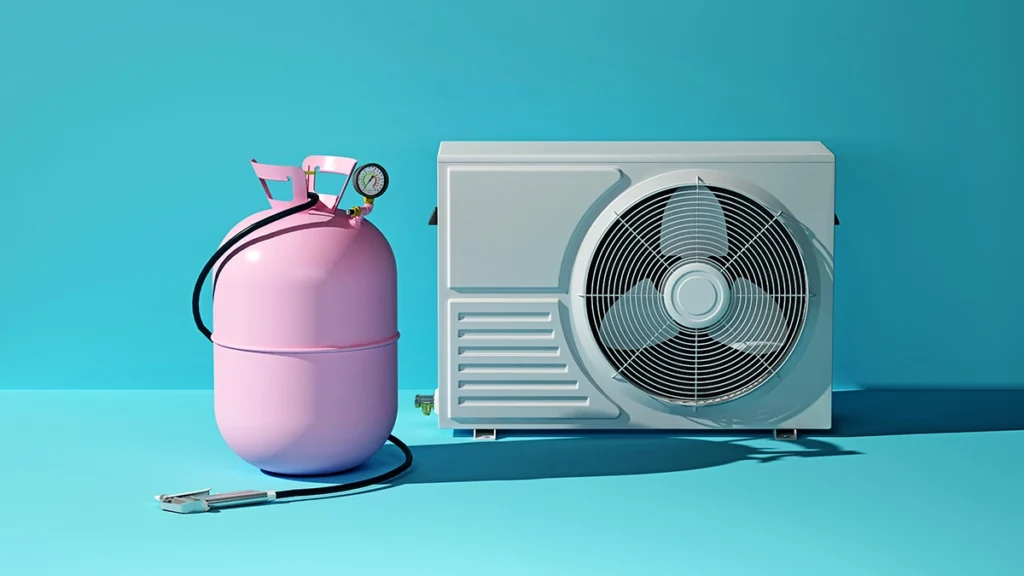
R410A refrigerant keeps your AC running cold, and if it leaks out, your system won’t cool your home no matter how low you crank the thermostat. Most central air conditioners installed in the last fifteen years run on R410A instead of the older R22. Understanding what it does — and recognizing the warning signs of a leak — protects both your comfort during a Thibodaux August and your wallet from compressor damage. Refrigerant doesn’t get “used up” like gas in a car; it cycles in a closed loop, which means a low level always points to a leak that needs professional attention. We’ll walk you through what R410A is, why your system depends on it, and when to call our team for a refrigerant check.
What Is R410A Refrigerant?
R410A is the refrigerant inside most modern central air conditioners and heat pumps installed in homes across Thibodaux and the surrounding area. It’s the substance that absorbs heat from the air inside your home and releases it outdoors, making cooling possible. Chemically, R410A is a 50/50 blend of difluoromethane (R-32) and pentafluoroethane (R-125). This combination offers higher heat transfer efficiency than its predecessor R-22, . That improved efficiency means your system can move heat more effectively at higher pressures, which is why newer equipment is built specifically to handle it.
R410A became the industry standard in residential systems after R-22 was phased out under federal environmental regulations. R-22, commonly called Freon, was found to damage the ozone layer, so production stopped in 2020. While R410A doesn’t harm the ozone, it is a greenhouse gas, which is why the HVAC industry is gradually transitioning to even newer alternatives. If your air conditioner was installed after 2010, it almost certainly uses R410A. Because this refrigerant operates at much higher pressure than R-22, the two are not interchangeable. Using the wrong type can damage your compressor and void manufacturer coverage.
If your system is low on refrigerant, that always signals a leak, not normal depletion. When we respond to a cooling issue, we check refrigerant levels and inspect components for leaks before recommending the safest repair path for your equipment.
Why Your AC Uses R410A Refrigerant
If your air conditioning system was installed or replaced after 2010, it almost certainly runs on R410A refrigerant. This hydrochlorofluorocarbon-free blend became the industry standard because it doesn’t damage the earth’s ozone layer. That marked a critical improvement over older R-22 refrigerant. When manufacturers and technicians phased out R-22, R410A emerged as the replacement that met new environmental regulations while delivering reliable cooling performance across residential systems.
R410A operates at higher pressures than its predecessor, which means your system was specifically designed to handle those pressures safely. That higher pressure allows the refrigerant to absorb and release heat more efficiently. As a result, you often see better energy performance when paired with a properly sized, well-maintained system. According to the EPA, R-410A has a global warming potential of 2,088. One pound released equals the warming impact of 2,088 pounds of CO2 over a century. So while it protects the ozone, keeping it sealed inside your system matters for climate reasons too.
When we service an R410A system, we check for leaks, verify proper refrigerant charge (the exact amount the system needs to run efficiently), and ensure all components can handle the operating pressures. If you notice reduced cooling or higher energy bills, those can signal a refrigerant issue. Contact us at Good Call so our team can inspect your system, pinpoint any problems, and restore your comfort safely.
Signs Your System Is Low on R410A
If your air conditioner can’t keep up with the heat in Thibodaux, low refrigerant might be the culprit. One of the clearest signs is warm or barely cool air blowing from your vents even when the thermostat is set correctly. You might also notice ice forming on the evaporator coil (the indoor component that absorbs heat) or along the refrigerant lines. That’s a telltale symptom that the system is struggling to absorb enough heat due to low charge.
Listen for hissing or bubbling sounds near your outdoor unit, which often point to a refrigerant leak. Many homeowners also see their energy bills climb steadily. When refrigerant runs low, the compressor works harder and longer to achieve the same cooling. This drives up runtime and energy use. If your system cycles on and off more frequently than usual or runs continuously without reaching your set temperature, that’s another red flag.
When we respond to refrigerant concerns, we perform a thorough leak check, pressure test, and system inspection to pinpoint the source. Call Good Call to schedule a diagnostic visit. Refrigerant doesn’t simply evaporate, so any loss means a leak that needs professional repair.
What Happens During a Refrigerant Check
When you schedule a refrigerant check with Good Call, our EPA-certified technicians arrive with specialized gauges and leak-detection equipment designed specifically for R410A systems. Your technician will connect diagnostic gauges to the service ports on your outdoor unit to measure system pressures while your system runs. These readings tell us whether your refrigerant charge is sitting where the manufacturer intended or if you’re running low—and by how much. We also measure the temperature split across your indoor coil. This reveals how efficiently refrigerant is absorbing and releasing heat through the cycle.
If the readings indicate a low charge, we don’t immediately add refrigerant. Instead, we search for the leak. We use electronic leak detectors that can sense even trace amounts of refrigerant escaping from joints, valve cores, coil seams, and line-set connections. In some cases we apply specialized detection solutions to suspected areas. We may also use ultraviolet dye that fluoresces under black light, making pinpoint leaks visible. Finding and repairing the leak first is essential. Adding refrigerant without fixing the source just delays the problem and wastes both refrigerant and your investment.
Once any leaks are sealed, your technician will prepare the system and restore the refrigerant to the exact specification on your condenser nameplate. R410A operates at higher pressures than older refrigerants, so precision matters. Even a small variance from the target can reduce efficiency and strain components. After the service, we run the system through a full cooling cycle, recheck all readings, and confirm that your home is reaching the set temperature comfortably. Our goal is to leave your system running exactly as the engineers designed it—no guesswork, no shortcuts.
When to Call for R410A Service
If your air conditioner is blowing warm air, cycling on and off frequently, or struggling to keep your Thibodaux home comfortable even when the thermostat is set correctly, those are strong signals that refrigerant may be low. You might also notice ice forming on the refrigerant lines or hear hissing sounds near the outdoor unit. Both point to a possible leak. Because R410A operates at higher pressure than older refrigerants, even a small leak can quickly reduce system performance. This forces your compressor to work harder, risking expensive damage.
Refrigerant work is strictly regulated by the EPA. Only technicians with current EPA certification can legally handle R410A. When we respond to a refrigerant concern, we use calibrated equipment to check system performance. We pinpoint the leak source with electronic detectors or UV dye, repair the leak, and restore the system to the manufacturer’s exact specifications.
You don’t have to troubleshoot this alone. Our team is ready to diagnose refrigerant issues promptly and restore your system’s performance. Reach out to Good Call today, and we’ll get your air conditioning running the way it should.
Frequently Asked Questions
Can I add R410A refrigerant to my AC myself?
No, only EPA-certified technicians can legally handle R410A refrigerant because it requires specialized equipment and training to service systems safely. Attempting DIY work skips critical leak detection, wastes refrigerant, and risks damaging your compressor. We find the leak, repair it, and restore your system to manufacturer specifications so it runs efficiently.
How long does R410A refrigerant last in an air conditioner?
R410A refrigerant lasts the lifetime of your air conditioner because it circulates in a sealed, closed-loop system. It never gets “used up” like fuel. If your level drops, you have a leak in the coils, line set, or connections. We locate the leak, repair it, then restore your system to proper cooling.
What is the difference between R410A and R22 refrigerant?
R410A operates at much higher pressure than R22 and doesn’t damage the ozone layer. That’s why it replaced R22 after production ended in 2020. The two refrigerants are chemically incompatible. Mixing them destroys your compressor. Systems built after 2010 run on R410A exclusively, so older R22 equipment can’t be retrofitted.
How do I know if my AC is leaking R410A refrigerant?
Ice buildup on your indoor coil or lines, hissing sounds near the outdoor unit, and warm air from vents are the most common leak symptoms. You might also notice the system running constantly without cooling or higher energy bills. Call us at Good Call so we can inspect, detect the leak, and repair it before low refrigerant damages your compressor.